

Gum Bleaching Dentists in Los Angeles
Changes in gum color can slowly change how a smile is perceived, even when the teeth themselves are healthy, clean, and well maintained. Darkened or uneven gums may become more noticeable in photographs or real life, drawing attention upward and affecting overall smile balance. Many people looking into gum bleaching dentists in Los Angeles are responding to this contrast, especially when gum pigmentation feels more prominent than tooth shade or alignment.
At PhD Dental, treatment provided by gum bleaching dentists in Los Angeles is planned with a strong emphasis on soft tissue care, safety, and controlled cosmetic refinement. Pigmentation can be influenced by a range of factors, from natural melanin levels to environmental exposure, which means treatment must be tailored rather than standardized. Addressing gum color thoughtfully allows improvement without compromising tissue health, helping the smile look more even and cohesive instead of artificially altered. If gum discoloration has been affecting how confident you feel about your smile, a professional evaluation can help determine what type of correction is both appropriate and safe. Call PhD Dental at (323)269-5437 or visit our contact page to schedule an appointment and learn more about options offered by skilled gum bleaching dentists.
Top-Rated Dentists
in Los Angeles

Patient-First Dentistry for Every Stage of Life
From early childhood development to adult care, we focus on patient comfort and comprehensive treatment.
Removing Barriers to Dental Care
We believe everyone deserves access to high-quality dental care, regardless of financial situation.

Comprehensive Dentistry Under One Roof
Orthodontics, implants, oral surgery, and preventative care all conveniently located in our clinics.

Expertise, Access & Convenient Locations
Multiple clinic locations across Los Angeles with extended hours to fit your busy schedule.
Table of Contents
- How Dentists Assess Gum Pigmentation And Tissue Health
- When Cosmetic Gum Bleaching Is An Appropriate Treatment Choice
- Why Professional Gum Bleaching Differs From Home Based Methods
- How PhD Dental Evaluates And Manages Gum Pigmentation
- Call PhD Dental Today to Get a Consultation From Our Gum Bleaching Dentists in Los Angeles
How Dentists Assess Gum Pigmentation And Tissue Health
Evaluating gum pigmentation requires a clinical process that considers tissue health, biological behavior, and cosmetic predictability rather than color alone. Patients researching gum bleaching dentists in Los Angeles are often surprised to learn that pigmentation assessment focuses first on whether the gum tissue is healthy enough to undergo cosmetic correction safely. Dentists examine how pigmentation developed, how deep it appears within the tissue, and whether any underlying conditions are influencing gum color. This assessment ensures that cosmetic goals do not override soft tissue stability or long term oral health.
At PhD Dental, assessment by gum bleaching dentists in Los Angeles follows a structured clinical sequence designed to distinguish natural pigmentation from changes caused by irritation, inflammation, or external factors. This distinction is essential because cosmetic treatment approaches vary depending on the biological source of pigmentation. Thorough evaluation reduces unnecessary intervention and ensures any cosmetic correction is appropriate, controlled, and predictable.

Dentists begin assessment by carefully observing gum color, tone variation, and distribution across different regions of the mouth. This includes evaluating whether pigmentation appears symmetrical, localized to specific areas, or follows anatomical landmarks such as the gum margins or interdental spaces. Differences in pattern can indicate whether pigmentation is genetically driven, environmentally influenced, or associated with past irritation. Visual examination establishes an initial clinical hypothesis. These observations guide the direction of further evaluation.
Why Pigmentation Distribution Provides Insight Into Underlying Causes
Uniform pigmentation across the gums often reflects natural melanin concentration rather than a pathological change. In contrast, irregular or patchy discoloration may suggest localized irritation, past trauma, or external staining factors. Understanding distribution patterns allows dentists to distinguish cosmetic variation from tissue response.
How Dentists Differentiate Natural Pigmentation From Acquired Changes
Dentists compare pigmentation patterns with expected anatomical norms and patient history. Natural pigmentation tends to be consistent in tone and placement, while acquired discoloration often appears uneven or region specific. This differentiation influences whether cosmetic intervention is advisable.
Assessment extends beyond color to include how thick, firm, and securely attached the gum tissue is to the underlying bone. Healthy gums typically appear resilient, well contoured, and resistant to gentle pressure. Thin, delicate, or loosely attached tissue may respond unpredictably to cosmetic procedures. Tissue structure directly influences treatment selection and technique. Structural evaluation protects against complications.
Why Tissue Thickness Determines Treatment Tolerance
Thicker gum tissue generally tolerates cosmetic procedures more predictably than thin tissue. Thin gums are more prone to irritation, recession, or delayed healing. Identifying tissue thickness allows dentists to adjust treatment plans accordingly.
How Tissue Texture Reflects Biological Stability
Firm, stippled gums often indicate stable tissue with good blood supply and attachment. Smooth, shiny, or swollen surfaces may suggest inflammation or compromised health. Texture assessment helps determine readiness for cosmetic care.
Before cosmetic gum bleaching is considered, dentists evaluate whether the gums show signs of active inflammation or disease. Redness, bleeding, tenderness, or swelling indicate that cosmetic treatment should be postponed. Treating pigmentation without addressing inflammation can worsen tissue response. Disease control takes priority over appearance. Screening protects tissue integrity.
Why Cosmetic Procedures Are Delayed In The Presence Of Inflammation
Inflamed gum tissue reacts more aggressively to stimulation and may heal unpredictably. Performing cosmetic procedures under these conditions increases the risk of discomfort, prolonged recovery, or worsening irritation. Stabilizing gum health first improves safety.
How Early Detection Prevents Long Term Tissue Complications
Identifying gum disease or irritation early allows it to be managed before cosmetic intervention. Healthy tissue responds more consistently to treatment and maintains results longer. Prevention reduces the likelihood of future corrective care.
After completing a comprehensive assessment, dentists determine whether cosmetic gum bleaching aligns with tissue health and patient goals. Not all pigmentation requires treatment, and not all tissue is suitable for cosmetic correction. Recommendations are based on predictability, safety, and patient preference. Clear criteria guide decision making. Informed recommendations improve satisfaction.
Why Some Pigmentation Is Best Left Untreated
Natural pigmentation does not indicate disease and does not always require cosmetic correction. Treating pigmentation solely for appearance is optional and based on individual comfort. Recognizing this prevents unnecessary procedures.
How Assessment Findings Shape Personalized Treatment Decisions
Evaluation results determine whether treatment is recommended, modified, or deferred. Personalization ensures that cosmetic care aligns with biological realities. Clear guidance supports confident decision making.
When Cosmetic Gum Bleaching Is An Appropriate Treatment Choice
Cosmetic gum bleaching is considered appropriate only when pigmentation affects appearance without compromising gum tissue health or biological stability. Patients researching gum bleaching dentists in Los Angeles often want clarity on whether treatment is purely aesthetic or if clinical conditions must be met before proceeding. Determining appropriateness requires identifying the source of pigmentation, confirming tissue readiness, and evaluating whether cosmetic correction can be performed predictably without increasing risk.
At PhD Dental, gum bleaching dentists in Los Angeles recommend cosmetic treatment only after confirming that gum condition, pigmentation characteristics, and patient goals align with safe and controlled correction. Treatment decisions are made conservatively, with emphasis on avoiding unnecessary intervention and preventing adverse tissue response. The situations below describe when cosmetic gum bleaching is typically considered appropriate.
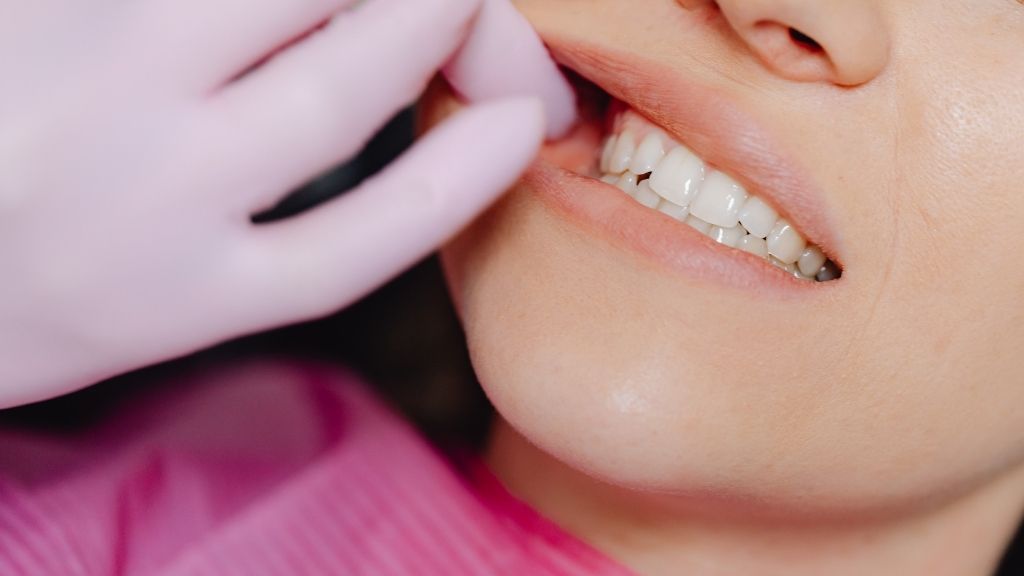
Cosmetic gum bleaching is appropriate when gum tissue shows no signs of active inflammation, infection, or periodontal disease. Healthy gums typically appear firm, well attached, and free from bleeding during examination. Performing cosmetic treatment on compromised tissue increases the likelihood of irritation and delayed healing. Addressing inflammation first establishes a stable foundation for any aesthetic correction.
Why Cosmetic Treatment Is Deferred When Inflammation Is Present
Inflamed gum tissue reacts unpredictably to cosmetic procedures and may respond with prolonged sensitivity or uneven healing. Pigmentation treatment does not resolve the underlying inflammatory process. Proceeding before stabilization introduces avoidable risk.
How Dentists Determine Whether Gums Are Clinically Stable
Dentists evaluate tissue firmness, attachment, bleeding response, and overall color consistency. These findings indicate whether biological conditions are suitable for cosmetic intervention. Objective clinical indicators guide timing decisions.
Gum bleaching is appropriate when pigmentation reflects cosmetic variation rather than changes caused by disease or systemic conditions. Natural melanin concentration, environmental exposure, or past irritation can alter gum color without affecting tissue health. Identifying cosmetic pigmentation ensures that treatment addresses appearance rather than concealing a medical concern. Proper classification prevents inappropriate care.
Why The Source Of Pigmentation Determines Treatment Direction
Disease related discoloration requires medical or periodontal management rather than cosmetic correction. Treating cosmetic pigmentation alone does not address pathological causes. Accurate identification prevents misdirected treatment.
How Clinical Evaluation Differentiates Cosmetic Pigmentation From Pathology
Dentists analyze pigmentation distribution, symmetry, onset history, and associated tissue changes. Consistent coloration without swelling, ulceration, or bleeding often indicates cosmetic pigmentation. These distinctions inform treatment selection.
Cosmetic gum bleaching is best suited for individuals who want to reduce excessive contrast rather than completely alter natural gum tone. The treatment aims to normalize appearance so gums blend more evenly with teeth and lips. Patients who expect refinement rather than transformation tend to view results as natural. Expectation alignment is a critical part of candidacy assessment.
Why Overly Aggressive Expectations Lead To Dissatisfaction
Gum bleaching modifies pigmentation within biological limits rather than creating uniform coloration. Expecting dramatic change can lead to disappointment even when treatment is technically successful. Understanding realistic outcomes shapes satisfaction.
How Dentists Establish Clear Outcome Parameters Before Treatment
Dentists explain the degree of lightening that can be achieved based on pigmentation depth and tissue response. Discussion includes limitations and variability. Clear communication defines achievable results.
Gum bleaching is appropriate when tooth color, alignment, and shape are satisfactory, but gum pigmentation disrupts overall smile appearance. In these cases, correcting gum color alone may restore balance without additional cosmetic procedures. Treating only the affected area avoids unnecessary alteration of healthy structures. Targeted intervention maintains proportional aesthetics.
Why Isolated Gum Pigmentation Can Dominate Smile Perception
Dark gum tissue can draw attention upward even when teeth are well proportioned and bright. This contrast alters visual focus during smiling and speaking. Addressing pigmentation rebalances attention within the smile.
How Focused Treatment Prevents Unnecessary Cosmetic Expansion
Limiting correction to gum pigmentation avoids introducing treatments that do not address the primary concern. Precision prevents overtreatment. Restraint maintains natural appearance.
Why Professional Gum Bleaching Differs From Home Based Methods
Professional gum bleaching differs from home based methods because gum tissue responds to cosmetic intervention in a fundamentally different way than tooth enamel. Patients researching gum bleaching dentists in Los Angeles often encounter products or advice suggesting gum discoloration can be managed independently, without understanding how sensitive and biologically active gum tissue actually is. Unlike enamel, gum tissue contains blood vessels and nerve endings that react quickly to irritation, making unregulated approaches far more likely to cause harm than improvement.
Gum bleaching dentists in Los Angeles approach treatment using a clinical framework that emphasizes controlled application, tissue assessment, and predictable healing response. Professional care accounts for pigmentation depth, tissue thickness, and individual variability, while home based methods lack safeguards for safe use on soft tissue. The differences below explain why professional treatment cannot be replicated outside a clinical setting.

Professional gum bleaching allows dentists to control exactly where treatment is applied and how deeply pigmentation is addressed within the tissue. Pigmentation can exist at different levels of the gum structure, and treating beyond the intended depth can irritate healthy tissue unnecessarily. Home based methods typically apply products broadly across the gums without accounting for variation in tissue thickness or pigmentation concentration. Precision is essential when working with living soft tissue rather than enamel.
Why Depth Control Is Essential For Safe Gum Pigmentation Treatment
Gum tissue contains vascular structures close to the surface that react quickly to chemical or thermal exposure. Applying treatment without depth awareness can disrupt tissue integrity and prolong healing time. Understanding depth limitations reduces the likelihood of irritation and uneven outcomes.
How Dentists Regulate Treatment Depth During Professional Procedures
Dentists evaluate pigmentation characteristics and observe tissue response before determining how aggressively treatment can be applied. Application is limited to specific regions and durations based on clinical judgment rather than generalized instructions. Controlled delivery minimizes unnecessary tissue stress.
Professional gum bleaching begins only after confirming that the gum tissue is healthy, stable, and capable of responding predictably to cosmetic correction. Dentists screen for inflammation, infection, fragility, or disease that could complicate treatment or affect healing. Home based methods provide no mechanism for assessing tissue condition before application. Applying cosmetic treatment to compromised tissue can worsen existing problems.
Why Tissue Health Determines Whether Cosmetic Treatment Is Appropriate
Inflamed or unstable gum tissue reacts unpredictably to cosmetic intervention and may heal unevenly afterward. Cosmetic treatment does not address underlying disease processes that require clinical management. Confirming tissue health prevents avoidable complications.
How Professional Assessment Prevents Inappropriate Cosmetic Treatment
Dentists identify conditions that must be resolved before pigmentation correction is considered. Treatment sequencing is planned to avoid layering cosmetic procedures onto unstable tissue. This approach reduces the risk of adverse outcomes.
Professional gum bleaching relies on techniques developed specifically for interaction with soft tissue rather than enamel surfaces. These methods account for gum anatomy, blood supply, and biological response to controlled intervention. Home based products are often adapted from tooth whitening concepts that are not designed for gum tissue. Using inappropriate techniques increases the likelihood of irritation or tissue damage.
Why Tooth Whitening Products Are Unsuitable For Gum Tissue
Products intended for enamel assume a hard, non living surface that tolerates exposure differently than soft tissue. Applying enamel focused products to gums ignores differences in absorption and sensitivity. This mismatch creates unnecessary risk.
How Professional Techniques Align With Gum Biology
Professional methods are selected based on how gum tissue responds to controlled exposure and healing cycles. Treatment protocols reflect biological limitations rather than cosmetic convenience. Alignment with tissue behavior improves predictability.
Professional gum bleaching includes observation during treatment and evaluation after completion to assess tissue response. Dentists can modify technique or stop treatment if signs of irritation or uneven response appear. Home based methods offer no oversight or ability to adjust based on real time tissue feedback. Monitoring allows early intervention if problems arise.
Why Real Time Observation Reduces The Risk Of Tissue Injury
Immediate clinical observation allows dentists to recognize early changes in tissue color, texture, or sensitivity. Continuing treatment despite warning signs can lead to prolonged discomfort or damage. Observation provides a safety margin.
How Follow Up Evaluation Influences Long Term Cosmetic Results
Post treatment evaluation allows dentists to assess healing patterns and residual pigmentation. Recommendations can be adjusted based on how tissue recovers over time. Follow up helps maintain consistent results.
How PhD Dental Evaluates And Manages Gum Pigmentation
Managing gum pigmentation requires a careful balance between cosmetic goals and soft tissue health, especially because gum tissue responds differently than enamel to any form of intervention. At PhD Dental, evaluation begins with understanding how pigmentation developed, how deeply it is present within the tissue, and how the gums respond under normal conditions. This process ensures that management decisions are based on biological behavior rather than appearance alone.
Patients seeking gum bleaching dentists in Los Angeles often arrive with concerns about uneven or dark gum color but limited clarity on what can be treated safely. PhD Dental approaches gum pigmentation management by separating cosmetic variation from conditions that require medical or periodontal attention. This distinction allows treatment planning to remain conservative, deliberate, and grounded in tissue stability.

Evaluation starts with identifying how pigmentation is distributed across the gums and how deeply it appears within the tissue layers. Surface level pigmentation behaves differently from pigment that is embedded deeper within the gum structure. Understanding this distinction is critical because it affects which management strategies are appropriate and which should be avoided. Depth and distribution guide the entire decision making process.
Why Pigmentation Depth Changes Treatment Considerations
Shallow pigmentation may respond predictably to cosmetic intervention, while deeper pigmentation may have biological limitations. Treating beyond safe depth boundaries increases the likelihood of irritation or uneven healing. Depth assessment reduces unnecessary risk.
How Clinical Observation Determines Pigmentation Characteristics
Dentists analyze color consistency, borders, and transitions between pigmented and non pigmented tissue. These visual cues provide insight into how pigment is distributed. Observation informs safe management pathways.
Before any cosmetic management is considered, gum tissue must demonstrate stability and resilience under examination. Healthy gums typically appear firm, well attached, and free from active inflammation or bleeding. Pigmentation management is deferred when tissue shows signs of irritation, disease, or fragility. Stability determines readiness.
Why Cosmetic Management Is Not Performed On Unstable Tissue
Compromised tissue reacts unpredictably to cosmetic procedures and may heal inconsistently. Managing pigmentation without first resolving instability can worsen tissue response. Health takes precedence over appearance.
How Dentists Evaluate Tissue Readiness Clinically
Dentists assess firmness, attachment, color consistency, and bleeding response during examination. These indicators reveal whether the tissue can tolerate cosmetic management. Objective findings guide timing.
Pigmentation is not always static and can be influenced by lifestyle factors, medical history, and natural melanin expression. Smoking history, medication use, and systemic conditions are reviewed because they may affect both pigmentation behavior and healing response. Understanding these influences prevents unrealistic expectations. Context matters in management planning.
Why Background Factors Influence Cosmetic Predictability
External influences can alter how pigment behaves over time or how tissue responds after treatment. Ignoring these variables can lead to inconsistent outcomes. Awareness shapes appropriate recommendations.
How Patient History Guides Management Strategy Selection
Medical and lifestyle history helps determine whether pigmentation is likely to recur or respond variably. This information affects both technique selection and timing. Planning reflects individual circumstances.
Once pigmentation characteristics and tissue health are clearly understood, management strategies are selected conservatively. Not all pigmentation requires correction, and not all cases benefit from cosmetic intervention. Decisions are based on predictability, safety, and patient preference rather than uniform cosmetic goals. Restraint is intentional.
Why Conservative Management Often Produces Better Long Term Results
Overly aggressive cosmetic correction can disrupt tissue balance and healing behavior. Conservative management respects biological limits. Long term outcomes depend on stability rather than intensity.
How Individualized Planning Prevents Overtreatment
Each case is evaluated on its own merits rather than compared to cosmetic ideals. Management is limited to what improves appearance without compromising tissue integrity. Individualized planning protects natural variation.
Call PhD Dental Today to Get a Consultation From Our Gum Bleaching Dentists in Los Angeles
Changes in gum pigmentation can affect a smile drastically, even when teeth and overall oral health are well maintained. Working with experienced gum bleaching dentists in Los Angeles allows gum pigmentation concerns to be addressed carefully. A strategic approach helps ensure that any improvement feels natural rather than forced or temporary. At PhD Dental, patients seeking gum bleaching dentists in Los Angeles receive evaluation and treatment planning that prioritize safety and long term tissue stability.
Decisions are made based on how pigmentation developed, how the gums respond clinically, and if cosmetic correction aligns with individual goals. Many people choose gum bleaching dentists in Los Angeles because professional care reduces unnecessary risk. If you are considering cosmetic correction for your gums, call PhD Dental at (323)269-5437 or visit our contact page to schedule a consultation and discuss if professional gum bleaching is appropriate for your situation.
Get in Touch with PhD Dental
Pick your location
Los Angeles
Los Angeles is a diverse and fast-moving city where access to dependable dental care is essential for individuals and families alike. PhD Dental serves patients throughout Los Angeles with a commitment to personalized care and long-term oral health.
Hours
- Mon 9:30AM - 6:30PM
- Tue 9:30AM - 6:30PM
- Wed 9:30AM - 6:30PM
- Thu 9:30AM - 6:30PM
- Fri 9:30AM - 6:30PM
- Sat 9:00AM - 4:00PM
- Sun Closed