Dental Implants in Compton
Last updated: November 21, 2026
A dental implant replaces a missing tooth with a fixed tooth that looks, feels, and works like your own — and at PhD Dental in Compton, implants are placed by a specialist, not fitted in as a side service. Our periodontist, Dr. Ori Levy, places implants at our office at 609 S Long Beach Blvd, Compton, CA 90221, on his scheduled days here: the evaluation and imaging, the placement, the healing, and the two-visit crown restoration are all handled inside one practice, with the scale of an eight-office group behind this neighborhood office on Long Beach Blvd. If you are missing a tooth, or tired of a denture that moves, call (424) 232-0508 and book a consultation. Without insurance, it starts with an exam and a full set of x-rays for $69.
What is a dental implant?
An implant has three parts: the implant itself — a small titanium post placed in the jaw where the tooth root used to be, which fuses with the bone as it heals; a connector; and the crown you see and chew with, custom-made for your tooth. Because the post stands in for a root, an implant does two things its alternatives cannot: it does not come out at night, like a denture, and it does not lean on the neighboring teeth to hold it in place, like a bridge. It also keeps stimulating the bone in that spot when you chew, which is what slows the bone from shrinking away after a tooth is lost. One implant replaces one tooth; implants can also replace several teeth, or anchor a denture so it stops slipping.
Meet Dr. Ori Levy, the periodontist who places your implant
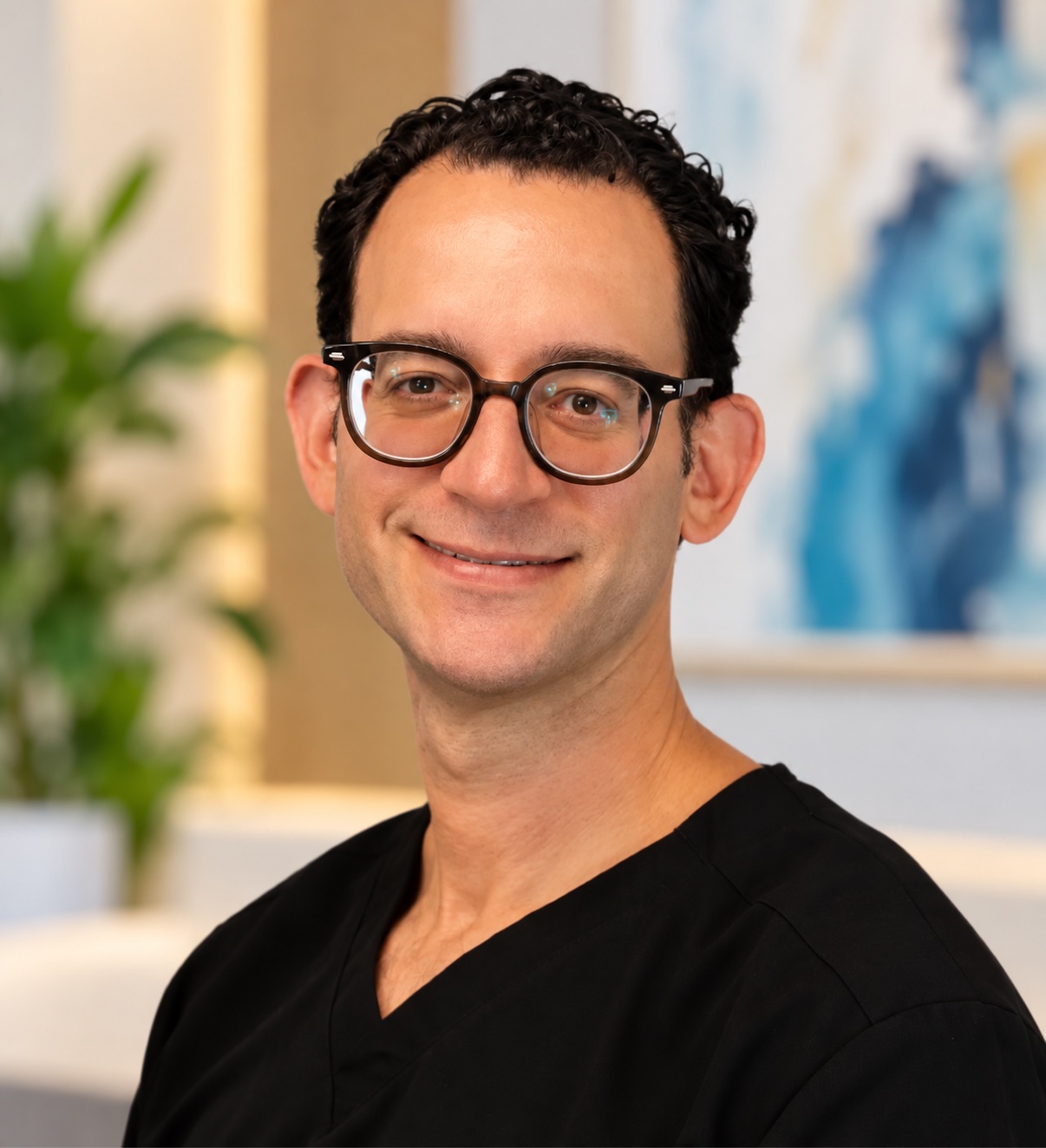
When you choose an implant at PhD Dental Compton, you are not handed from stranger to stranger. Your implant is placed by Dr. Ori Levy, our board-certified periodontist — a Diplomate of the American Board of Periodontology. Dr. Levy earned his dental degree at the UCLA School of Dentistry and completed his specialty training in periodontics at the Greater Los Angeles VA Healthcare System. He has nearly two decades of experience, about fifteen of them with PhD Dental, and he speaks both English and Spanish. He sees implant patients at our Compton office on scheduled days, and he stays with you through the whole journey: he reviews your bone health and medical history at your evaluation, places the implant, follows your healing, and sees your treatment through to the finished crown. His specialty work also includes gum grafting and bone regeneration — the treatments that rebuild the foundation an implant stands on. If a bridge, a partial denture, or no treatment yet is the smarter answer for your case, you will hear that from him instead — before any work begins, he explains the treatment he recommends and gives you a clear cost breakdown in writing, so the plan, the timeline, and the price are all in front of you before you commit to anything.
Who is a good candidate for a dental implant?
Most adults missing one or more teeth are candidates. What matters most is enough healthy bone to hold the post — and when a tooth has been missing a while, the bone in that spot slowly shrinks, so some patients need bone preparation or grafting first to rebuild the area; that adds healing time, but it does not automatically rule you out — the consultation is how we find out. Healthy gums matter too, which is why we treat gum problems before placing implants. Health conditions and habits like smoking affect healing and will be part of an honest conversation at your consultation, not a surprise later. If a tooth still needs to be removed first, we talk through replacement at the same visit — our oral surgeon, Dr. Hassan Haidar, sees patients at our Compton office on scheduled days for extractions and surgical care. Age by itself is not a barrier; many of our implant patients are in their sixties and seventies.
How much do dental implants cost?
An implant has no single set price. The cost depends on how many teeth are being replaced, whether the tooth still needs to be removed first, whether the bone needs preparation or grafting to hold the implant securely, and the crown that goes on top — the implant post and the finished crown are separate parts of treatment, and both are included in your estimate. What we can promise is the order of events: at your consultation, Dr. Levy examines your mouth, explains the treatment he recommends and the timeline, and you receive a clear cost breakdown in writing before any work begins. We offer in-house payment plans and financing options, so the cost can be spread over time. Your first step — the exam and full x-rays — is $69 without insurance, as a package that cannot be unbundled.
How does the implant process work, and how long does it take?
The full process usually takes several months from start to final crown, because the implant needs time to fuse with the bone before the crown is placed on it. In outline: the consultation and planning come first — exam, full x-rays, and a review of your bone health and medical history, ending with a timeline for your specific case and a written estimate. Then the implant post is placed. Then a healing period while the bone integrates — most of the timeline is your body doing quiet work between short visits. Finally, the crown is made and fitted, in the two-visit pattern crowns follow. Some patients need a healing period or bone preparation before placement, which adds time. At your consultation you will get the timeline for your specific case.
Dental implant, bridge, or denture — which is right for me?
Three genuinely different tools, and the comparison deserves more than a sales pitch. The implant is the independent: anchored in bone, indifferent to its neighbors, the longest-lived of the three with ordinary care — and the slowest and most expensive to complete. The bridge is the sprinter: fixed, finished quickly, but it enlists the two healthy teeth flanking the gap, which must be reshaped to carry it. The partial denture is the economist: the lowest cost, several teeth replaced in one appliance, balanced against nightly removal and no protection for the bone underneath. Which serves you is a function of your mouth, your health, and your budget in combination — the consultation prices all three side by side so the comparison is arithmetic, not rhetoric.
What are fixed full-arch implant dentures (often called All-on-4)?
When a jaw has lost most or all of its teeth — or when the denture replacing them has become a daily negotiation — the fixed alternative is an arch of teeth carried by a small set of implants, removed only by the dentist, for maintenance. It is the replacement that behaves most like the original equipment, and it is never an impulse decision: it is planned as its own course of treatment from records and measurements. The dedicated All-on-X Dental Implants in Compton page walks through that planning at this office, and at your consultation the team will compare the fixed arch against a snap-on denture and a well-made conventional one for your specific case.
How much do fixed full-arch implant dentures cost?
It sits at the top of the price range for tooth replacement, unavoidably: surgery, multiple implants, and an entire custom-made prosthesis are bundled into one figure, and that figure flexes with your bone, the implant count your case requires, and your material choices. For that reason we will not attach a number to it over the phone — anyone who does is guessing with your money. The consultation delivers the real one in writing, with the snap-on and conventional alternatives costed on the same basis for comparison, plus in-house payment plans and financing options for spreading it.
Does insurance help pay for dental implants?
Partly, sometimes — and the only way to know is to check your specific plan, which we do before your visit; we accept all PPO plans. PPO policies divide on implants, some contributing, many excluding them entirely. Medi-Cal’s position is firmer and deserves direct language: implants are generally not a benefit, reserved for rare, severe medical circumstances such as reconstruction after cancer surgery or major jaw injury. The replacement Medi-Cal does fund is dentures — full and partial — and both are made at this office.
Implant care for Compton and the communities around us
Patients come to our Compton office for implant consultations from Willowbrook, Watts, Paramount, South Gate, Bell, Bell Gardens, Carson, Gardena, and north Long Beach — often after years of working around a missing tooth or a loose denture. Because Dr. Levy’s Compton days are scheduled, the practical move is to book the consultation now rather than when the gap starts causing trouble; your plan and timeline will already be in place.
Common questions about dental implants
How long do dental implants last?
Decades is a fair expectation, and lifetime service is common. The conditions are unglamorous ones: daily brushing and flossing, regular checkups, and not using the tooth as a tool. The crown riding on the implant may eventually wear to the point of replacement — treat that as maintenance on a long-lived asset, not failure.
Can I get dental implants if I have bone loss?
Often, yes. Bone preparation or grafting can rebuild areas that have thinned since the tooth was lost, and Dr. Levy will assess your bone at the consultation and tell you what your case requires — including if implants are not advisable.
What is the difference between implants and bridges?
An implant is a full replacement — root and crown — standing on its own foundation. A bridge is a span: the false tooth hangs between crowns cemented onto the two neighbors, which are reshaped to become its supports. Choose the implant to preserve bone and leave healthy neighbors alone; choose the bridge for speed and a lower initial cost.
Is an implant the same as a “screw-in tooth”?
That is exactly the right mental picture. The post is set into the bone where the root used to anchor, the crown fastens onto it, and from then on it lives in your mouth permanently — brushed and flossed like the tooth it replaced.
What if I am nervous about implant surgery?
Say the word when you book and the appointment is designed around it — steps explained before they happen, nothing sprung on you. Two practical aids exist: nitrous oxide, available at select offices on request, and a calming medication taken in advance when someone drives you. What we will not do is imply otherwise about IV sedation: it is not offered.
What if my tooth needs to be pulled first?
Frequently — a failing tooth and its replacement are planned as one continuous case, with implant timing arranged around the extraction’s healing. Surgical removals within that plan are handled by Dr. Haidar, our oral surgeon, on his scheduled days at this office.
Can implants help hold my denture?
Yes, and it is the upgrade loose-denture patients praise most: a denture rebuilt to clip onto a few implants stops the slipping entirely. The Dentures in Compton page covers the arrangement, and your consultation can price it for your mouth.
How do I start?
Book the consultation. You bring the questions; we produce the exam, the full x-rays, a recommendation we can defend, and the complete cost in writing. The decision that follows is yours alone.
Book an implant consultation in Compton
Call (424) 232-0508 or book online, and ask for Dr. Levy’s next scheduled day at the Compton office. We are open Monday 10:30 AM to 6:00 PM, Tuesday 9:30 AM to 6:00 PM, Wednesday 11:00 AM to 6:00 PM, Thursday 9:30 AM to 6:00 PM, and Friday 9:00 AM to 2:00 PM at 609 S Long Beach Blvd, Compton. We accept PPO plans and Medi-Cal/Denti-Cal — we do not accept HMO plans — and we will verify your benefits before your visit.
- PhD Dental Compton: 609 S. Long Beach Blvd, Compton, CA 90221
- Call: (424) 232-0508
- Book online: Book an appointment
- Hours: Monday 10:30 AM–6:00 PM, Tuesday 9:30 AM–6:00 PM, Wednesday 11:00 AM–6:00 PM, Thursday 9:30 AM–6:00 PM, Friday 9:00 AM–2:00 PM, Saturday and Sunday closed. This office is not open on Saturdays; on Saturdays, our Lynwood Adults office is open 9:00 AM to 4:00 PM.