Dentures in Inglewood
Last updated: November 12, 2026
If you are missing most of your teeth — or all of them — dentures put a complete set back: teeth you can eat with comfortably, speak with clearly, and smile with in photographs. At PhD Dental’s Inglewood office, 11344 Crenshaw Blvd, Unit A, the menu is wider than most patients expect: conventional full dentures, partial dentures, immediate dentures that go in the day teeth come out, implant overdentures that snap onto implants and hold their place, and fixed full-arch implant dentures that are screwed onto implants and never come out at all. Which of those fits you turns on how many teeth remain, the condition of your gums and jawbone, and your budget — and a consultation answers all three before you commit to anything. Start with a $69 exam and full x-rays, and you receive a written cost breakdown before any work begins.
What are dentures?
Dentures are removable replacement teeth — the “false teeth” of everyday speech — made to stand in for missing teeth and the gum tissue around them. A full denture replaces every tooth in the upper jaw, the lower jaw, or both. A partial denture replaces some teeth and clips onto the healthy ones that stay. A temporary partial, often called a flipper, covers one or a few teeth for a limited stretch — while you heal, or while a longer plan is being built. Every denture at our office is made for one mouth only: it is built from records of yours, by a high-quality dental laboratory our offices work with, so its shape, fit, and appearance are matched to your face and your bite rather than drawn from a shelf.
I still have some healthy teeth — can I get a partial denture?
Yes — and keeping them is usually the right instinct. If some of your teeth are healthy and strong, a partial denture replaces only the missing ones and holds onto the teeth you keep; those natural teeth steady the partial and help preserve the jawbone beneath them. If some remaining teeth are damaged, the exam sorts out which are strong enough to support a partial, which need treatment first, and which cannot be kept — because a partial built on failing teeth fails along with them. At your Inglewood consultation we tell you plainly which teeth are worth keeping and which are not, and the partial is planned around the ones that stay. You do not have to fix everything in your mouth before a partial can be made — but the teeth it holds onto must be sound enough to carry it, and we show you exactly where that line falls in your case before anything is made.
My teeth have to come out — do I have to go without teeth?
No. That gap is what an immediate denture exists to prevent: it is made in advance, from records taken before your extraction appointment, and placed the same day the teeth are removed, so you leave wearing teeth while your gums heal underneath. Healing changes the shape of your gums across the following months, and the denture is adjusted through that settling-in period to keep it fitting — a normal, planned part of the process. A conventional denture takes the other route: it is made after the gums have healed from extractions, fitted to the healed shape of your mouth from the start. Which route suits you — including the point that broken roots left in the gum must be removed before a denture can sit over them properly — is worked out at your consultation, before any teeth come out.
How are dentures made, and what does the process look like?
The steps are similar for most dentures:
- 1. Consultation. Exam, full x-rays, and a review of your remaining teeth, gums, and jawbone. You get a written cost breakdown before any work begins.
- 2. Records. Impressions and measurements of your mouth, plus the shade and shape of the teeth, chosen with you — yes, you choose the shade of your denture teeth, with the dentist’s guidance on what looks natural against your skin tone and any remaining teeth.
- 3. Fabrication. The laboratory makes your denture from those records. For an overdenture, the implants are placed first and given time to fuse with the bone before the denture is finished to snap onto them — that route takes longer, and your consultation lays out the full timeline for your case.
- 4. Fitting and adjustments. Your denture is fitted, your bite is checked, and small adjustments are made as your mouth settles.
My denture slips when I eat — what is a snap-on denture?
A snap-on denture — an implant overdenture — is a removable denture that clips onto dental implants set into the jaw, typically two implants on the lower jaw and usually four on the upper jaw. Instead of resting on your gums alone, it snaps onto those implants and stays seated while you eat and talk, then comes out at night for cleaning like any regular denture. The loose lower denture is the most common reason patients ask us about it: the lower denture has the least surface to grip, and two implants transform how secure it feels.
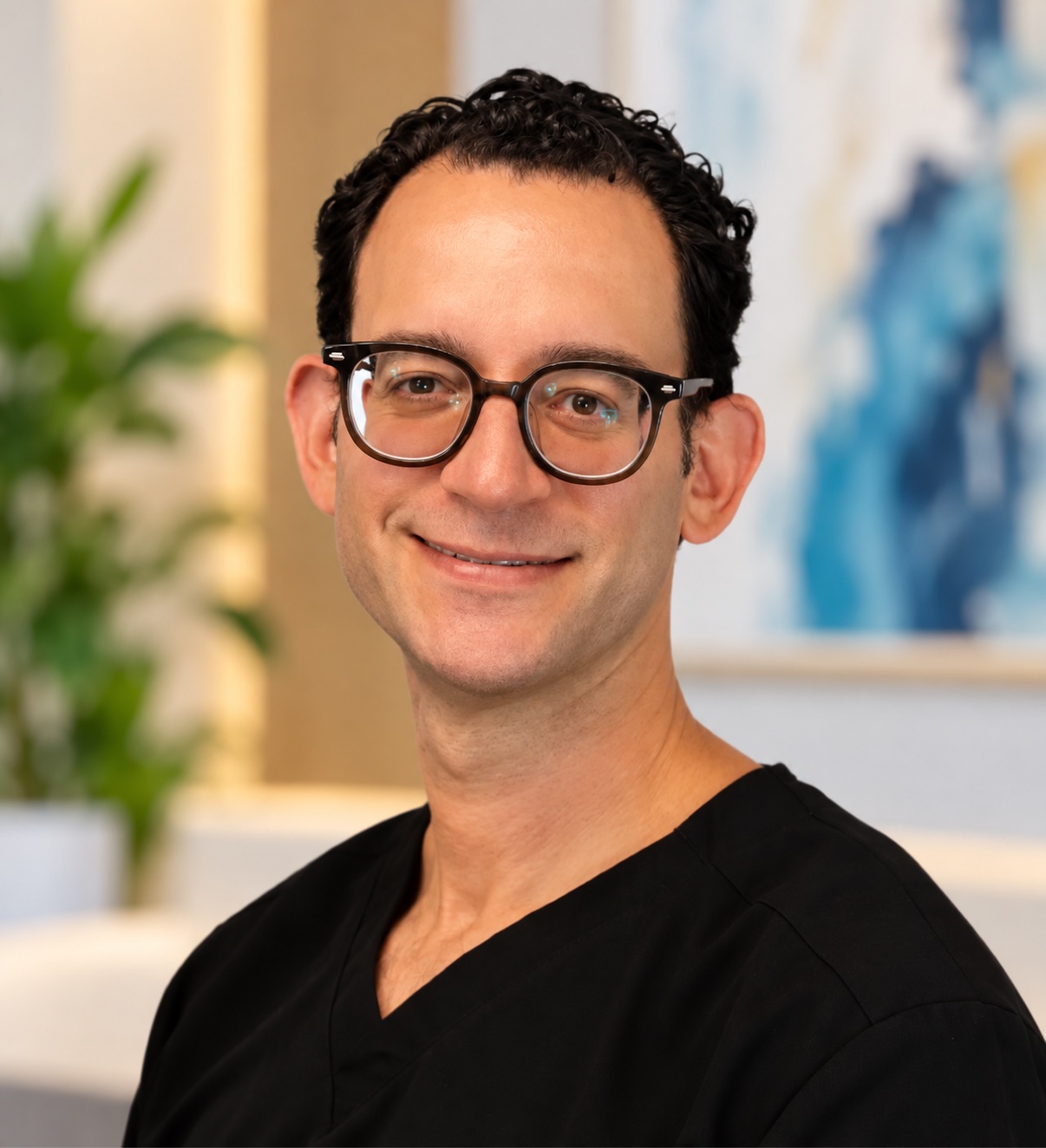
At PhD Dental, the implants beneath an overdenture are placed by our periodontist, Dr. Ori Levy — a board-certified periodontist (Diplomate of the American Board of Periodontology), trained at the UCLA School of Dentistry and in periodontics at the Greater Los Angeles VA Healthcare System, with nearly two decades of experience and about 15 years at PhD Dental. He sees patients at our Inglewood office on scheduled days. Placement is the decisive step in an overdenture, and here it is planned by a specialist around the finished denture: the implant positions are chosen to hold the denture you will actually wear. The denture itself comes from a high-quality dental laboratory, the implants use high-quality components, and the general dentists who restore and fit your denture are experienced and knowledgeable — the whole journey, from implant placement to the finished denture, happens inside one practice.
I want teeth that don’t come out at all — what are fixed, screwed-in dentures?
Some patients want no removable teeth in any form, and this is the option built for them. A fixed full-arch implant denture replaces every tooth in the upper jaw, the lower jaw, or both with a full set of teeth secured to dental implants with screws. Patients call them “permanent teeth” or “teeth that don’t come out,” and the treatment often goes by All-on-4 or All-on-X, after the small number of implants that carry the whole arch. The teeth stay in your mouth day and night — only your dentist removes them, for maintenance at your checkups.
The contrast with a snap-on denture is simple: the overdenture clips onto its implants and you take it out each night to clean it; the fixed full-arch denture is screwed onto its implants and does not come out at all. Both are far steadier than a denture resting on gums alone — the choice is whether your new teeth come out for cleaning or stay fixed in place.
At PhD Dental in Inglewood, fixed full-arch implant dentures are made right at this office. As with an overdenture, the implants are placed by our periodontist, Dr. Ori Levy, who sees patients here on scheduled days, and placement is planned around the finished set of teeth. Our general dentists then restore the treatment — they build and fit the fixed teeth onto the implants — and the teeth are fabricated by the same high-quality dental laboratory, using high-quality implant components. The implants are given time to fuse with the bone before the finished teeth are fitted, so the full process runs in months rather than days; your consultation lays out the timeline and the cost for your case before you commit to anything.
Why does my denture move, hurt, or collect food underneath?
A denture’s fit is a relationship between an unchanging appliance and a mouth that never stops changing. After teeth are removed, the ridge of gum and bone underneath resorbs — quickly in the first year, then slowly for the rest of your life — so a denture fitted perfectly in January can be rocking by the following winter without anything being “wrong” with it. Wear plays its part too: denture teeth flatten with years of chewing, the bite settles unevenly, and a hairline crack or a single sore spot can tilt how the whole thing seats. Soreness in the first days with a new denture is different — that is usually one pressure point, and an adjustment visit finds and relieves it. But a denture that has started slipping at meals, clicking when you talk, or letting food creep underneath is telling you its foundation has moved, and piling on adhesive only masks the report. The remedies scale with the cause: a targeted adjustment for a pressure spot; a reline, which resurfaces the inside of the denture to match your gums as they are today; a new denture when the old one is worn past saving; and, for the chronically loose lower denture, implants to snap onto — the lasting fix described above. And this service is not limited to dentures we made: if another office made yours, we will still evaluate it, and what can be repaired or relined, and what that will cost, is confirmed in a written estimate before any work begins.
If your denture breaks, or a sore spot makes it painful to wear, call our Inglewood office — we provide urgent dental care, and we evaluate the denture before any work begins.
Getting used to dentures
New dentures ask for practice — that is normal, and for most people it is a matter of weeks of adjustment, not days. Eating goes easier at first with soft foods cut small, chewing on both sides at once; speaking clears up with reading aloud; a partial denture usually feels familiar sooner than a full one, because your remaining teeth still do much of the work. Dentures come out at night: your gums need the rest, and the night is when the denture is cleaned and stored.
How much do dentures cost?
There is no honest single price, because the cost depends on the type of denture and on your case. What drives it:
- Full, partial, immediate, implant overdenture, or fixed full-arch. Each involves a different amount of laboratory work; the implant options add the implants and their placement.
- One jaw or both. Replacing the teeth in a single arch costs less than a full set.
- Whether teeth still need to be removed before the denture can be made.
- Whether bone preparation is needed to hold implants securely, for patients choosing an overdenture.
The starting point is an exam and a full set of x-rays — $69 without insurance, sold as one package that cannot be unbundled. Once the exam is done, your cost breakdown is put in writing before any treatment begins, and in-house payment plans and financing options are there if you want to spread the total over time.
Does Medi-Cal pay for dentures?
In Inglewood, Medi-Cal can cover conventional dentures when they are medically necessary — including immediate dentures when teeth need to be extracted. Dentures are renewable every five years under Medi-Cal. Medi-Cal does not pay for implant overdentures or for fixed full-arch implant dentures. Many Medi-Cal procedures require the plan’s authorization first: we handle the request in-house and submit it electronically for you as soon as the diagnosis is made — the plan makes the final decision, and we let you know as soon as it comes back. Coverage depends on your case and your plan, so we check your coverage before treatment, not after. We also accept Aetna PPO, MetLife PPO, Delta Dental PPO, Cigna PPO, Guardian PPO, UnitedHealthcare PPO, Anthem Blue Cross PPO, Blue Shield of California PPO, Humana PPO, Principal PPO, Ameritas PPO, United Concordia PPO, Sun Life PPO, Lincoln Financial PPO, Unum PPO, The Hartford PPO, Renaissance Dental PPO, Premier Access PPO, and Health Net PPO, and we are in network with Delta Dental at all eight offices. We do not accept any HMO plans. We accept Medi-Cal. We accept Denti-Cal.
Common questions about dentures
Are implant dentures the same as snap-on dentures?
Yes — “implant dentures,” “snap-on dentures,” and “implant overdentures” are three names for one thing: a removable denture that clips onto implants. It is a different arrangement from a fixed implant bridge, which never comes out. At your consultation we explain which of the two fits your case.
Will my dentures look natural?
Your denture is built from records of your mouth, with tooth shade and shape chosen alongside you, and fabricated by a high-quality dental laboratory. The goal is a set of teeth that belongs to your face — most patients are surprised by how much like themselves they look.
How long do dentures last?
Dentures wear with daily use, and the shape of your gums and jaw changes slowly over the years, so fit changes with time. Regular checkups and professional cleanings — cleanings start from $125, fluoride included — let us check the fit and the health of your mouth, and adjust or reline the denture when it needs it. Under Medi-Cal, dentures are renewable every five years, which is a fair guide to the working life of a denture even outside that program.
What if I am nervous about extractions or implant placement?
Say so when you book, and we will plan around it. At select offices, nitrous oxide can be requested. There is also a calming medication some patients take the night before and again the morning of the appointment — anyone who takes it needs a driver for both directions, to the office and back home.
How do I start?
With an exam and a full set of x-rays — $69 without insurance. You get a clear plan — full, partial, immediate, implant overdenture, or fixed implant denture — and a written cost breakdown before you commit to treatment. Walk-ins are welcome at our Inglewood office.
Dentures in Inglewood and the communities around us
Our Inglewood office is on Crenshaw Boulevard, and patients come to us for dentures from all over this part of Greater Los Angeles. Our closest neighbors — Lennox, Hawthorne, West Athens, Westmont, Del Aire, and Lawndale — are just minutes away, and we also see patients from Alondra Park, Gardena, Hyde Park, View Park-Windsor Hills, and Ladera Heights. From the South Bay and the beach cities, patients travel in from El Segundo, Manhattan Beach, Hermosa Beach, and Redondo Beach, and from the east we welcome patients from Watts, Willowbrook, Florence-Graham, Huntington Park, South Gate, Carson, and Culver City. With hours until 6:30 PM Monday through Friday and Saturday hours, most patients can fit denture visits around work rather than against it.
Book a denture consultation in Inglewood
Call our Inglewood office at (323) 529-6856 to book a denture consultation, or book online. Walk-ins are welcome. You will find us at 11344 Crenshaw Blvd, Unit A, Inglewood, CA 90303, open Monday–Friday 9:30 AM–6:30 PM, Saturday 9:00 AM–4:00 PM, Sunday closed.
- PhD Dental Inglewood: 11344 Crenshaw Blvd Unit A, Inglewood, CA 90303
- Call: (323) 529-6856
- Book online: Book an appointment
- Hours: Monday–Friday 9:30 AM–6:30 PM, Saturday 9:00 AM–4:00 PM, Sunday closed. We are open on Saturdays, with weekday hours until 6:30 PM.