Dentures in Compton
Last updated: November 21, 2026
Missing most or all of your teeth changes eating, speaking, and whether you smile without thinking about it. Dentures hand those things back — and at PhD Dental in Compton they are made at our office at 609 S Long Beach Blvd, Compton, CA 90221, in every form patients actually need: conventional full dentures, partial dentures, immediate dentures placed the day teeth come out, snap-on implant overdentures that clip onto implants and stay seated, and fixed full-arch implant dentures that are secured to implants and do not come out at all. Which form fits you turns on how many teeth remain, the health of your gums and jawbone, and your budget. The way to find out is an exam with a full set of x-rays, $69 without insurance — call (424) 232-0508 — and you receive a written cost breakdown before any work begins, so where you stand is never a guess.
What are dentures?
Dentures are removable replacement teeth, made to stand in for missing teeth and the gum tissue around them. A full denture replaces every tooth in the upper jaw, the lower jaw, or both, and rests on the gums. A partial denture replaces some teeth and anchors to the healthy teeth that remain. A temporary partial — patients call it a flipper — replaces one or a few teeth for a limited stretch, while you heal or while a longer-term plan is made. Every denture we deliver is made for one mouth only: it is built from records of yours, by a dental laboratory our offices work with, so shape, fit, and appearance are matched to your face and your bite rather than pulled from a shelf.
I still have some healthy teeth — can I get a partial denture?
Yes — and holding onto them is usually the better plan. A partial replaces only the missing teeth and grips the teeth you keep; those natural teeth steady the partial and preserve the jawbone beneath them. If some remaining teeth are damaged, the exam sorts out which are strong enough to build on, which need treatment first, and which cannot be kept — because a partial built on failing teeth fails along with them. At your consultation we tell you honestly where each tooth stands and plan the partial around the keepers. You do not have to fix everything in your mouth before a partial can be made — but the teeth carrying it must be sound enough to carry it, and we explain exactly where that line falls in your case before anything is made. Our Partial Dentures in Compton page covers the types in depth.
My teeth have to come out — do I have to go without teeth?
No. An immediate denture is made ahead of time, from records taken before your extraction appointment, and placed the moment the teeth are removed — you heal with teeth in place instead of waiting toothless. As your gums reshape over the following months, the denture is adjusted and relined to keep pace with the healing; that settling period is a planned part of the process, not a complication. A conventional denture takes the opposite route: it is made after the gums have healed, so it fits your mouth’s settled shape from day one. Which route suits you — including whether broken roots left in the gum must be removed first so a denture can sit properly — is worked out at your consultation, before any teeth come out. Our oral surgeon, Dr. Hassan Haidar, sees patients at our offices on scheduled days for the extractions themselves.
How are dentures made, and what does the process look like?
The sequence has four beats. It opens with the consultation: an exam, full x-rays, and a review of your remaining teeth, gums, and jawbone, ending in a written cost breakdown before any work begins. Next come the records — impressions and measurements of your mouth, and the shade and shape of the teeth, chosen with you, with the dentist’s guidance on what looks natural against your skin tone and any teeth you are keeping. Then fabrication: the laboratory builds your denture from those records (for an overdenture, the implants are placed first and given time to fuse with the bone before the denture is finished to snap onto them, so that route takes longer). Finally, fitting and adjustments: the denture is seated, your bite is checked, and small corrections are made as your mouth settles. Your consultation lays out the full sequence for your case in writing before the process begins.
My denture slips when I eat — what is a snap-on denture?
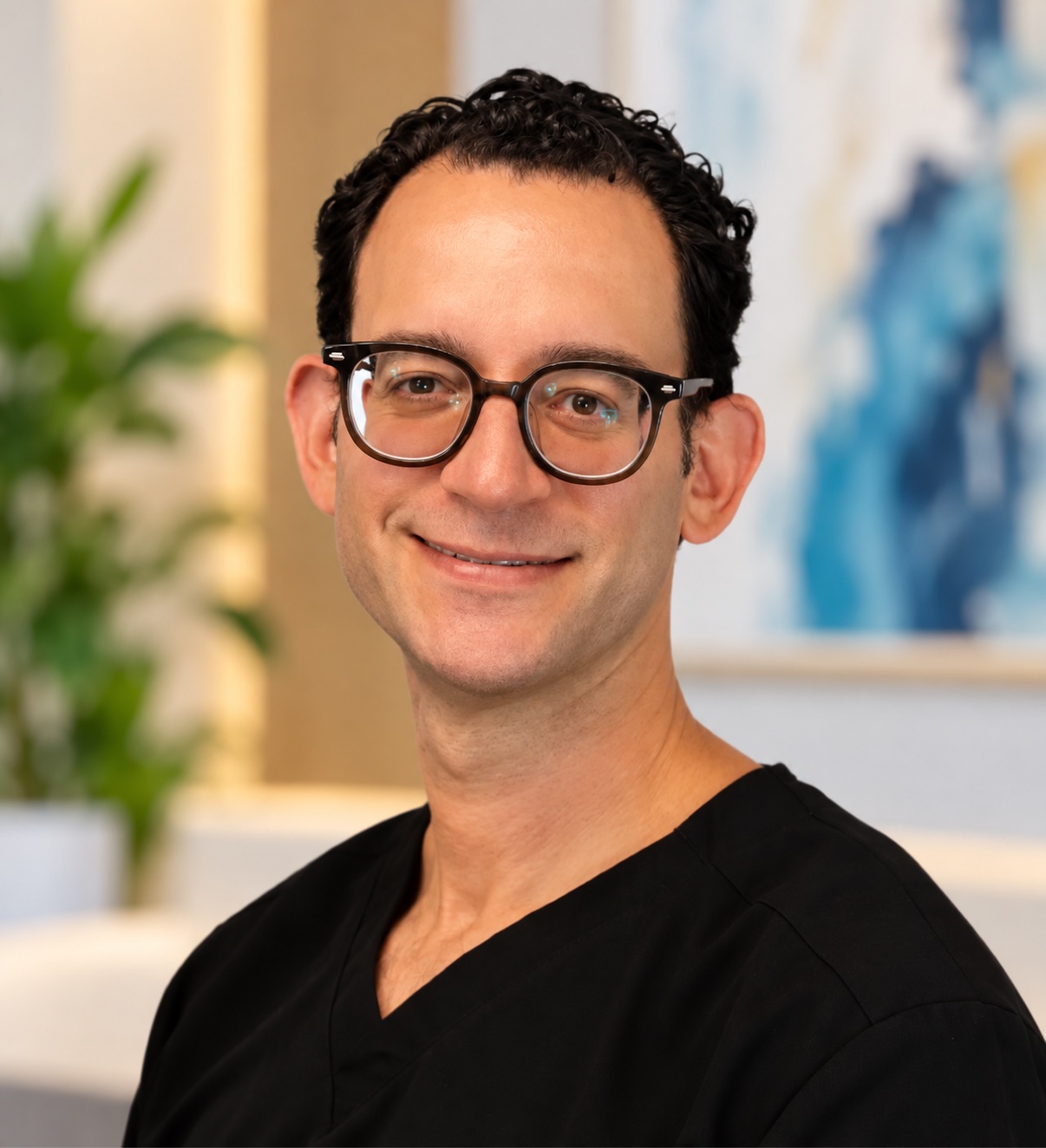
A snap-on denture — an implant overdenture — is a removable denture that clips onto dental implants placed in the jaw, typically two implants on the lower jaw and usually four on the upper. Instead of floating on your gums, it snaps onto those anchors and stays seated while you eat and talk, then comes out at night for cleaning like any denture. The loose lower denture is the classic reason patients ask: the lower jaw offers a plain denture the least to hold onto, and a small number of implants transforms that. The implants beneath an overdenture are placed by our periodontist, Dr. Ori Levy — a board-certified periodontist (Diplomate of the American Board of Periodontology), trained at the UCLA School of Dentistry with specialty training at the Greater Los Angeles VA Healthcare System, with nearly two decades of experience and about fifteen years at PhD Dental — who sees patients at our Compton office on scheduled days. Positions are planned around the denture you will actually wear, so the whole journey, from implant placement to finished teeth, happens inside one practice.
I want teeth that don’t come out at all — what are fixed, screwed-in dentures?
That is a fixed full-arch implant denture: a complete set of teeth for the upper jaw, the lower jaw, or both, secured to implants with screws so the teeth stay in day and night, and only the dentist removes them, for maintenance at your checkups. Patients call them “permanent teeth”; the treatment is often called All-on-4 or All-on-X, after the small number of implants holding the whole arch. The contrast with a snap-on is simple — the snap-on clips on and comes out nightly for cleaning; the fixed arch does not come out at all. Both are far steadier than a denture resting on gums alone; the choice is whether your new teeth come out for cleaning or stay fixed in place. At our Compton office the implants are again placed by Dr. Levy on his scheduled days, planned around the finished set of teeth, and because the implants need time to fuse with the bone before the final teeth are fitted, the full process runs months rather than days — your consultation sets out the timeline and the cost for your case before you commit to anything. Our All-on-X Dental Implants in Compton page goes deeper on full-arch planning.
Why does my denture move, hurt, or collect food underneath?
Because a denture rests on living tissue, and living tissue changes. The usual story: the gum and bone beneath the denture have slowly reshaped — fastest in the first year after teeth come out, and gradually ever after — or the denture’s teeth have worn enough to alter the bite, or a sore spot or hairline crack has changed how it seats. A brand-new denture that hurts in the first days is usually a pressure spot the dentist can find and relieve at an adjustment visit. A denture of any age that has begun falling out, rocking at meals, or trapping food underneath is reporting a changed fit, and the answer is an exam, not more adhesive. Fixes run from a simple adjustment, to a reline — a new surface fitted inside the denture so it matches your gums as they are now — to a new denture when the old one has worn beyond adjusting; and for a lower denture that simply will not stay put, implants to snap onto are the lasting answer, covered in the section above. Repairs and relines are a service we offer whether we made your denture or another office did: it starts with an evaluation of the denture’s condition, and what can be repaired or relined — and what it will cost — is confirmed in a written estimate before any work begins.
Getting used to dentures
Expect weeks of adjustment, not days — that is normal, and nearly every denture wearer goes through it. Eating comes easier starting with soft foods cut small, chewing on both sides at once so the denture stays balanced. Speech clears with practice; reading aloud at home genuinely helps. A partial usually feels familiar sooner than a full denture, because your remaining teeth still do much of the work. And dentures come out at night: your gums need the rest, and the night is when the denture gets cleaned and stored. Sore spots in the early days are what follow-up adjustments exist for — call us rather than enduring them, and skip the home repair kits, which can ruin a fit beyond professional rescue.
How much do dentures cost?
There is no honest flat price, because the cost depends on the type of denture and on your case. What drives it: the form itself — full, partial, immediate, snap-on overdenture, or fixed full-arch — each a different amount of laboratory work, with the implant options also carrying the implants and their placement; one jaw or both; whether teeth still need to be removed before the denture can be made; and whether bone preparation is needed to hold implants securely. Start with an exam and a full set of x-rays for $69 without insurance — the exam and x-rays are a package and cannot be unbundled. After the exam you receive a written cost breakdown before any treatment begins, and in-house payment plans and financing options are available to spread the cost.
Does Medi-Cal pay for dentures?
Yes. Medi-Cal and Denti-Cal cover full and partial dentures when you are missing teeth, with approval from the program before they are made — our office submits that request for you. Dentures do not count toward the program’s yearly dollar limit for adults, and adjustments, repairs, and relines are covered care as well. Under Medi-Cal, dentures are renewable every five years. One boundary to know plainly: Medi-Cal does not pay for implant overdentures or fixed full-arch implant dentures — the covered route is the conventional denture, made well. Call us and we will check your coverage and start the process.
Common questions about dentures
Are implant dentures the same as snap-on dentures?
Snap-on dentures are one kind of implant denture — the removable kind that clips onto implants and comes out at night for cleaning. Fixed full-arch teeth are also held by implants but never come out except at the dentist’s hands. At your consultation we explain both arrangements, with costs, so you can compare them fairly.
Will my dentures look natural?
Yes — that is the goal. Your denture is made from records of your mouth, with tooth shade and shape chosen with you and fabricated by the laboratory our offices work with. Most patients are surprised at how much like themselves they look; if something looks off at the try-in stage, that appointment exists so you can say so.
How long do dentures last?
Dentures wear with daily use, and the gums and jaw beneath them keep changing shape slowly, so fit is a moving target. Regular checkups let us check the fit and the health of your mouth and adjust or reline the denture when it needs it. Under Medi-Cal, dentures are renewable every five years — a fair guide to a denture’s working life outside the program as well.
What if I am nervous about extractions or implant placement?
Mention it when you book, and the visit gets planned around it: every step explained before it happens, a pace you can follow. Practical help exists too — nitrous oxide on request at select offices, or a calming medication taken before the appointment when a driver comes with it. One boundary, stated plainly: IV sedation is not offered here.
How do I start?
Book an exam at our Compton office. We will examine your mouth, lay out your options — full, partial, immediate, snap-on, or fixed — check your coverage, and give you a written estimate. Then the decision is yours.
Dentures in Compton and the communities around us
Patients come to our Compton office for dentures from Willowbrook, Watts, Paramount, South Gate, Bell, Bell Gardens, Downey, Carson, Gardena, and north Long Beach — including plenty of patients who first found us by bringing a parent or grandparent in. If you are helping a relative through denture decisions, you are welcome to sit in on the consultation and hear the plan and the prices directly. Our office is on Long Beach Blvd, open Monday through Friday — including Friday mornings until 2:00 PM — and closed on weekends; Saturday care is available at our Lynwood Adults office, a short drive north on the same boulevard.
Book a denture consultation in Compton
Call (424) 232-0508 or book online. Walk-ins are welcome. We accept Medi-Cal, Denti-Cal, and PPO plans — and we do not accept HMO plans — and we will verify your benefits before your visit.
- PhD Dental Compton: 609 S. Long Beach Blvd, Compton, CA 90221
- Call: (424) 232-0508
- Book online: Book an appointment
- Hours: Monday 10:30 AM–6:00 PM, Tuesday 9:30 AM–6:00 PM, Wednesday 11:00 AM–6:00 PM, Thursday 9:30 AM–6:00 PM, Friday 9:00 AM–2:00 PM, Saturday and Sunday closed. This office is not open on Saturdays; on Saturdays, our Lynwood Adults office is open 9:00 AM to 4:00 PM.