dental implants
Last updated: November 19, 2026
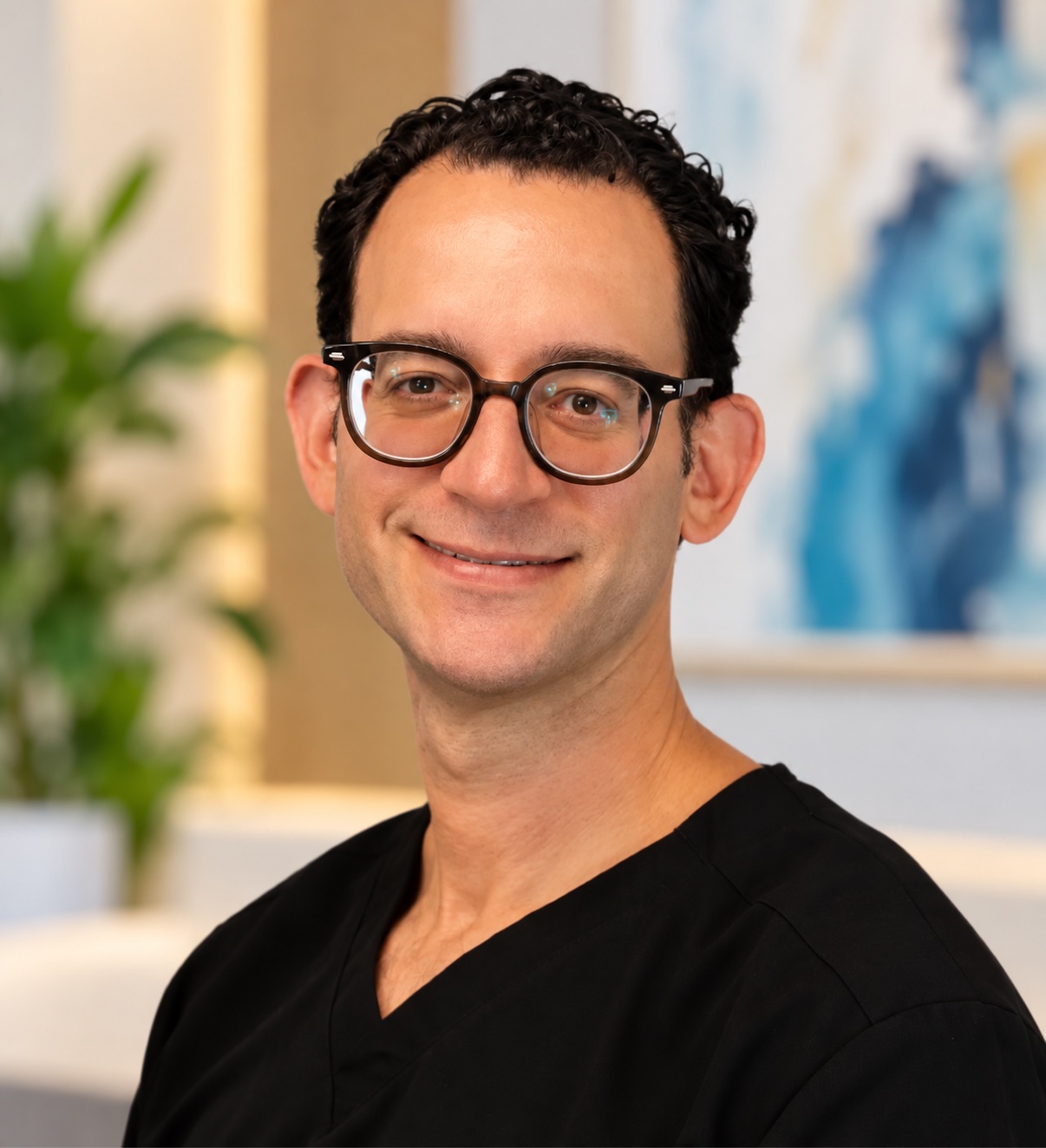
A dental implant replaces a missing tooth with a fixed tooth that looks, feels, and works like your own. At PhD Dental, dental implants are placed by our periodontist, Dr. Ori Levy, who sees patients across our seven adult offices in Greater Los Angeles on scheduled days. If you are missing a tooth — or a tooth cannot be saved — an implant consultation will tell you whether an implant is right for you, how long it would take, and exactly what it would cost, before you commit to anything.
What is a dental implant?
A dental implant is a small post placed in the jaw where a tooth is missing. After it heals and fuses with the bone, it holds a custom-made crown — the visible tooth on top. Unlike a denture, an implant does not come out at night. Unlike a bridge, it does not rely on the teeth next to it to hold it in place. One implant replaces one tooth; implants can also replace several teeth, or help hold a denture firmly in place.
Who is a good candidate for a dental implant?
Many adults who are missing a tooth can get an implant. At your consultation, Dr. Levy reviews the health of your gums and jawbone, your medical history, and which tooth needs to be replaced. Healthy gums and enough bone to hold the post are what matter most.
Some patients need bone preparation first. When a tooth has been missing for a while, the bone in that spot slowly shrinks. If there is not enough bone to hold an implant securely, bone grafting can rebuild the area so an implant becomes possible. That adds healing time before the implant is placed, but it does not automatically rule you out — the consultation is how we find out.
If a tooth still needs to be removed first, we will talk through replacement at the same visit. Our oral surgeon sees patients across our offices on scheduled days for extractions and surgical care. We will explain each option, the timeline, and the cost before you decide — and we will tell you honestly if another option fits you better.
How much do dental implants cost?
There is no honest flat price for an implant, because the cost depends on your case. What drives the price:
- Which tooth, and how many. Replacing one tooth costs less than replacing several.
- Whether the tooth still needs to be removed before the implant can be placed.
- Whether bone preparation or grafting is needed to hold the implant securely.
- The crown that goes on top. The implant post and the finished crown are separate parts of treatment, and both are included in your estimate.
Start with an exam and a full set of x-rays for $69 without insurance — the exam and x-rays are a package and cannot be unbundled. After the exam, you receive a written estimate before any treatment begins. In-house payment plans and financing options are available to help spread the cost.
How does the implant process work, and how long does it take?
The full process usually takes several months from start to final crown, because the implant needs time to fuse with the bone before the crown is placed on it. The steps:
- 1. Consultation. Exam, full x-rays, and a review of your bone health and medical history. You get a timeline for your specific case and a written estimate — before you commit to anything.
- 2. Placement. The implant post is placed in the jaw where the tooth is missing.
- 3. Healing. Over the next several months the implant fuses with the bone. This step is called osseointegration, and it is what makes an implant fixed and stable. Some patients need a healing period or bone preparation before this step, which adds time.
- 4. The crown. Once the implant has fused, the crown — the visible tooth — is made for you and fitted on top. The crown is a separate restoration and takes two visits: one for the records and impression the lab works from, and one to fit the finished crown.
After your crown is fitted, keeping the implant healthy is straightforward: daily brushing and flossing, regular checkups, and professional cleanings — cleanings start from $125, including fluoride. With proper care, dental implants can last many years, and often a lifetime.
Dental implant, bridge, or denture — which is right for me?
These are the three standard ways to replace a missing tooth, and the honest answer depends on your mouth, your timeline, and your budget:
- Dental implant. Fixed in place and independent — it does not rely on the teeth next to it, and it helps preserve the jawbone where the tooth was lost. It takes the longest, because of the healing time, and costs the most at the start.
- Bridge. A fixed replacement held by crowns on the teeth on either side of the gap. A bridge is finished faster, because there is no healing period — but the neighboring teeth have to be prepared to hold it.
- Denture or partial denture. Removable, and can replace several teeth at once. It comes out at night and can feel less stable than a fixed tooth. Implants can also be used to help hold a denture in place.
At your consultation we will explain each option that fits your case, with its timeline and cost, before you decide.
What are implant overdentures (snap-on dentures)?
An implant overdenture is a removable denture that snaps onto dental implants placed in the jaw — typically two implants on the lower jaw and usually four on the upper jaw. Patients also call them snap-on dentures or implant dentures. A regular denture rests on your gums, and a lower denture especially can slip when you eat or talk. An overdenture clips onto the implants and stays seated — then comes out at night for cleaning, like a regular denture. It is the middle path between a conventional denture and a fixed implant bridge: far steadier than a denture alone, and removable.
Who places the implants for an overdenture?
At PhD Dental, the implants under an overdenture are placed by our periodontist, Dr. Ori Levy — a board-certified periodontist (Diplomate of the American Board of Periodontology), trained at the UCLA School of Dentistry and in periodontics at the Greater Los Angeles VA Healthcare System, with nearly two decades of experience and about 15 years at PhD Dental. He sees patients across our offices on scheduled days. Implant placement is the crucial step in an overdenture, and it is planned around the finished denture: the implant positions are chosen to hold the denture you will actually wear. The denture itself is fabricated by a high-quality dental laboratory, the implants use high-quality components, and the general dentists who restore and fit your denture are experienced and knowledgeable — placement, restoration, and the finished denture all happen in one practice.
How much do implant overdentures cost?
An overdenture costs more than a conventional denture, because it includes the implants, their placement, and the denture made to snap onto them — and less than replacing every missing tooth with its own implant. The exact cost depends on how many implants your case needs, whether teeth still need to be removed, and whether bone preparation is needed to hold the implants securely. Start with an exam and a full set of x-rays for $69 without insurance — the exam and x-rays are a package and cannot be unbundled. After the exam, you receive a written cost breakdown before any treatment begins. In-house payment plans and financing options are available to help spread the cost, and we will verify what your plan covers before you decide.
What are fixed full-arch implant dentures (often called All-on-4)?
If most or all of the teeth in one jaw are missing or failing, a fixed full-arch denture replaces the whole set at once. The denture is secured to a small number of dental implants with screws, so it stays in your mouth — patients call them “permanent teeth” or “teeth that don’t come out,” and the treatment is often called All-on-4 or All-on-X, after the implants that hold the arch. It never comes out at night; only your dentist removes it, for maintenance. That is the difference from an implant overdenture, which snaps on and off for cleaning: the overdenture is removable, the fixed full-arch denture is not.
At PhD Dental, fixed full-arch treatment is offered at all seven of our adult offices across Greater Los Angeles. The implants are placed by our periodontist, Dr. Ori Levy — a board-certified periodontist (Diplomate of the American Board of Periodontology), trained at the UCLA School of Dentistry and in periodontics at the Greater Los Angeles VA Healthcare System, with nearly two decades of experience and about 15 years at PhD Dental — who sees patients across our offices on scheduled days. Placement is planned around the finished set of teeth, and our general dentists restore the treatment: they build and fit the fixed teeth on the implants, fabricated by a high-quality dental laboratory using high-quality implant components. The implants are given time to fuse with the bone before the finished teeth are fitted, so the process is measured in months — your consultation will lay out the full timeline for your case.
How much do fixed full-arch implant dentures cost?
A fixed full-arch denture costs more than a removable denture, because it includes the implants, their specialist placement, and a full set of fixed teeth made for your mouth — and it replaces an entire arch at once rather than tooth by tooth. The exact cost depends on whether one jaw or both are treated, whether teeth still need to be removed, and whether bone preparation is needed to hold the implants securely. Start with an exam and a full set of x-rays for $69 without insurance — the exam and x-rays are a package and cannot be unbundled. After the exam, you receive a written cost breakdown before any treatment begins. In-house payment plans and financing options are available to help spread the cost.
Does insurance help pay for dental implants?
Coverage for implants varies from plan to plan, so we check your coverage before treatment — not after. Call us and we will verify what your plan covers before you decide.
PhD Dental accepts all PPO plans at all eight offices. PPO plans we accept include: Aetna PPO, MetLife PPO, Delta Dental PPO, Cigna PPO, Guardian PPO, UnitedHealthcare PPO, Anthem Blue Cross PPO, Blue Shield of California PPO, Humana PPO, Principal PPO, Ameritas PPO, United Concordia PPO, Sun Life PPO, Lincoln Financial PPO, Unum PPO, The Hartford PPO, Renaissance Dental PPO, Premier Access PPO, and Health Net PPO. Please note we do not accept any HMO plans at this time.
As a practice, we accept Medi-Cal. We accept Denti-Cal. Those lines describe PhD Dental generally — they are not a statement that Medi-Cal or Denti-Cal pays for dental implants. Implant treatment is planned individually, and you will always receive a written estimate before treatment begins.
Common questions about dental implants
How long do dental implants last?
With proper care, dental implants can last many years, and often a lifetime. Daily brushing and flossing, regular checkups, and avoiding damage all help. At your consultation we will review the maintenance plan that helps an implant last.
What if I am nervous about implant surgery?
Tell us when you book. Nitrous oxide is offered at select offices, upon request. We can also provide a calming medication for the night before and the morning of your appointment — if you take it, you must have someone drive you to the office and home.
What if my tooth needs to be pulled first?
If a tooth cannot be saved, we can remove it and talk through replacement at the same visit. Our oral surgeon sees patients across our offices on scheduled days, and options include implants, bridges, and partial dentures. If that tooth is painful or broken, call the office closest to you — we provide urgent dental care, and we will talk through replacement at the same visit.
Can implants help hold my denture?
Yes. Implants can replace a single tooth, or help hold dentures in place so they do not shift. Your consultation will show which arrangement fits your case.
How do I start?
Start with an exam and a full set of x-rays for $69 without insurance. You will get a clear plan, a timeline for your case, and a written estimate before you commit to treatment. Walk-ins are welcome at all of our offices.
Book an implant consultation
Call the PhD Dental office closest to you to book an implant consultation with Dr. Levy. He sees patients across our offices on scheduled days, and if he is not at your office on the day you need, we will book you at the nearest office and coordinate your care. Walk-ins are welcome at all eight offices.
- Los Angeles: (323) 649-6905
- Inglewood: (323) 529-6856
- Lynwood Adults: (310) 861-7742
- Lynwood Kids: (310) 361-4829
- Pico Rivera: (562) 561-1405
- Compton: (424) 222-8440
- Westchester: (310) 893-6304
- Norwalk: (562) 620-4381